Twenty Guests, One Long Table: Why Small UK Weddings Make Stronger Films
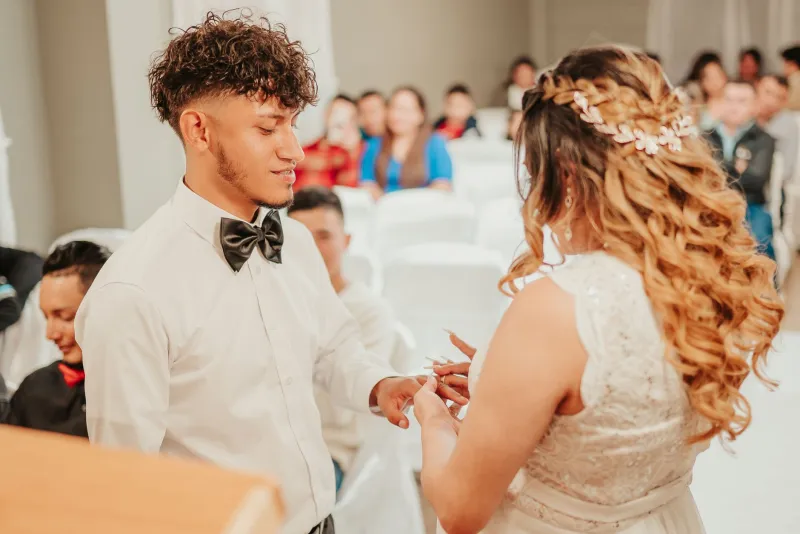
There's a sound in a small wedding film that you never quite get in a big one. A chair scraping back on a wooden floor as a dozen people turn to watch somebody walk in. No music swelling over the top, no two hundred guests chatting through it. Just the scrape, a nervous laugh, and someone's dad blowing his nose into a handkerchief he's had since 1998.
That's the bargain an intimate wedding makes with the camera: fewer people, far more room for the truth.
Over the past few years, guest lists across the UK have been shrinking — partly money, partly a growing suspicion that a hundred and forty people you half-know isn't actually a party. What couples are discovering on the other side of that decision is that a smaller room doesn't just feel calmer. It films better.
Why a shorter guest list changes what a lens can do
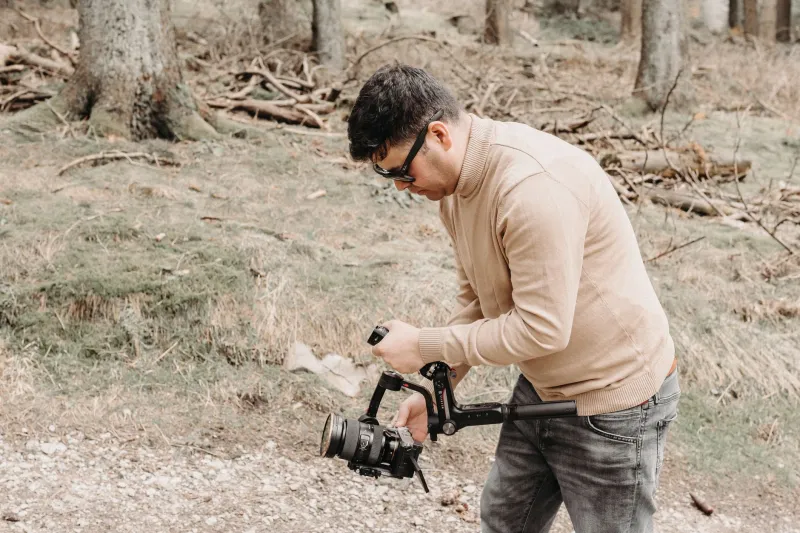
At a big do, a filmmaker spends most of the day solving logistics. Where's the light? Where's the second shooter? Can we get a clean shot of the vows without a guest's phone in the frame? At a wedding of fifteen or twenty, those problems mostly evaporate.
The camera can stand close enough to hear a whisper. Nobody needs a long lens. Group photos take twelve minutes instead of forty. And because there's no crowd to hide in, people tend to relax and behave like themselves — which is the entire point.
There's also a practical bonus couples rarely think about: sound. In a packed room, audio is a nightmare. In a back room of a pub with eighteen people in it, you can hear the vows, the laugh, the clink of a glass, and the one uncle who whispers something inappropriate during the register signing. That's the stuff you'll replay in thirty years.
Four small-wedding shapes, and what each one gives you
The registry office. Council chambers in Islington, Leeds, Cardiff or a converted town hall in the Borders. Formal, brisk, often fifteen minutes from start to finish — which is exactly why the details matter. The corridor beforehand. The surname being checked on the certificate. The slightly awkward shuffle for the first kiss. Filmmakers love these because nobody is performing.
The pub lunch. A back room, a long table, a landlord who's known the family for years. Speeches delivered standing on a chair or not at all. This is where a documentary-style approach earns its keep — the day becomes a rolling conversation with a wedding in the middle of it.
The coastal elopement. Two witnesses, a cliff path, weather doing whatever it likes. Wind is brutal on audio, so budget for a decent wind muff and be prepared to re-record vows somewhere sheltered if it's blowing a hoolie. What you get in return is landscape and movement — the walk, the arrival, the sea behind you.
The garden party. Borrowed chairs, a marquee from a mate, kids running through the sprinkler. Chaotic, warm, and full of the candid material that big weddings often squeeze out entirely.
The details that suddenly carry weight
In a large wedding, the details are decoration. In a small one, they're plot.
Grandma's brooch pinned on a lapel. A ring that's been in the family since the seventies. The wonky table in the pub that everybody remembers from a first date. Supermarket flowers arranged that morning on the kitchen floor. The single sentence in a two-minute speech that lands like a brick. Those are the shots that make a short film feel like a complete story rather than a trailer.
Worth saying out loud to your filmmaker: the two minutes before the ceremony, when nobody is talking. In a small wedding, that silence isn't empty — it's the whole room feeling the same thing at the same time.
Briefing a filmmaker when you've only got twenty guests
A few things genuinely help.
- Say the number early. Crew size and approach change completely between 20 and 120 guests. Nobody minds a small wedding; they mind finding out on the morning.
- Name the people who matter — and the ones who are fragile. Grandad with the walker, your aunt who hates being photographed, the cousin who'll cry at 3pm. A good filmmaker will quietly work around all of it.
- Give three to five must-haves, not a script. 'Vows, my dad's speech, and a shot of us walking down to the harbour' is a brief. A forty-item shot list is a hostage situation.
- Ask how they'll handle audio. Small weddings live or die on sound. A lapel mic on the celebrant and one on the speech-giver costs almost nothing and is worth more than a drone.
- Ask them to film the in-between bits. The walk from the register office to the pub. The waiting. The chat in the car park. That's where the character is.
- Be clear about hours. For a small celebration, four to six hours of coverage often covers everything. Say whether getting-ready matters to you, because that's usually what pushes it to a full day.
Building a filming timeline that doesn't flatten the day
Here's a rough shape that works for a registry office and pub lunch, adjusted to your own timings:
- 10:30 — getting ready, if you want it filmed
- 12:00 — ceremony
- 12:30 — drinks, confetti, congratulations
- 13:00 — group photographs (fifteen minutes, no more)
- 13:30 — lunch
- 15:00 — speeches
- 16:00 — twenty minutes away from the room for portraits
- 16:30 — back to the party
Two things to bend around. First, light: a December wedding in Manchester is dark by half four, so if outdoor portraits matter, they happen before lunch or not at all. A June wedding in Cornwall has golden hour at half eight and you should absolutely use it. Second, energy: grandparents fade, children melt down, and speeches land better before everyone's three pints in.
Build the plan around light and stamina, not around a tidy-looking schedule.
What to let go of
You don't need a drone, a second shooter, a same-day edit or a four-minute trailer released while you're still eating. What you want from a small wedding is a short film with a beginning, a middle and an end, plus a longer documentary edit of the ceremony and speeches for the people who couldn't be there.
One last thing. Couples often ask whether filming is worth it for a fifteen-guest wedding. The answer is that those fifteen people are exactly the ones who'll sit down and watch it again. Small doesn't mean less to remember. It usually means more.