Small Motions, Lasting Frames: The Wedding Film Details Nobody Poses
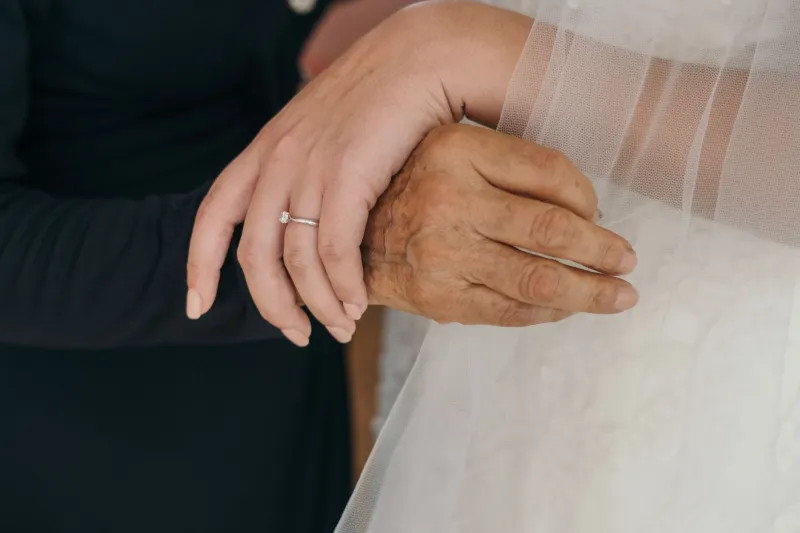
There is a moment in almost every wedding film that nobody planned. It is rarely the first kiss or the confetti walk. More often, it is a grandmother's thumb smoothing a granddaughter's veil, a groom fumbling a cufflink while his brother pretends not to notice, or two hands finding each other under the table during the speeches. These are the frames that make a film feel less like a record of an event and more like evidence of a life.
For couples planning a 2026 wedding, it is worth saying this plainly: the big set pieces will happen whether you plan them or not. The small gestures need a filmmaker who is watching for them. At One Forever Films, the aim is not to turn your day into a shot list. It is to notice the hands that hold it together.
Why hands do so much of the emotional work
Wedding days are full of admin. Someone straightens a jacket, pins a buttonhole, passes a tissue, checks a watch, carries a glass, finds a lost earring. In a British wedding, where everyone is often being politely brave, these small actions can say more than a speech. A father's hand hovering at his daughter's elbow before she walks in. A mother pressing a lipstick into a bride's palm. A best friend's fingers wrapped around a bouquet while the bride hugs someone else.
On screen, these details give the editor somewhere to breathe. A close-up of hands is not a distraction from the vows; it is a way of showing how the vows are being felt. When you watch the film in twenty years, the giant kiss will be familiar. The nervous cufflink fumble will be a surprise, and surprises are what make an archive feel alive.
The gestures worth putting on your filmmaker's radar
You do not need to choreograph any of this. You do need to make sure your filmmaker knows which people and objects matter. A simple note before the wedding can be enough: names, relationships, and the little things you would hate to miss.
A practical shot list to discuss might include:
- Getting-ready hands: cufflinks, buttons, a dress zip, jewellery clasps, veil pins, a mother's hands smoothing fabric.
- The handover: a bouquet passed between friends, a tissue pressed into a palm, an order of service folded and refolded.
- Vow hands: fingers clasped, a thumb rubbing a knuckle, rings being slid on, a hand resting on a back during the registrar's words.
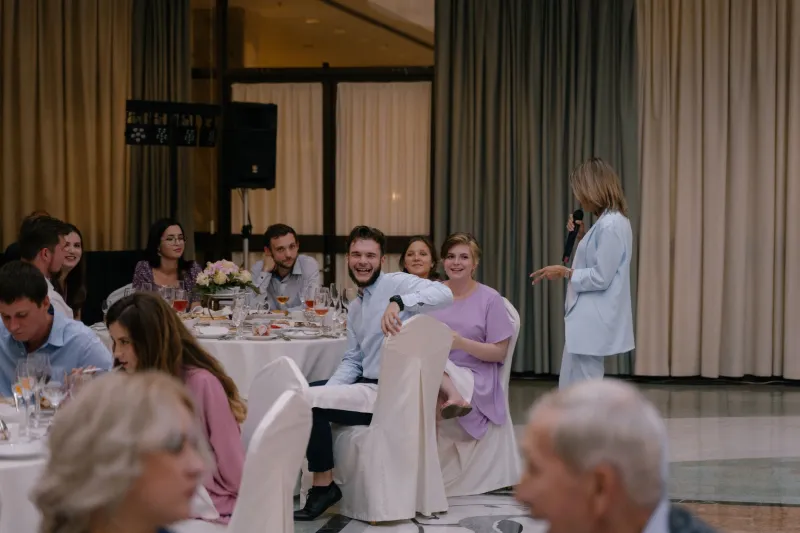
- Speech hands: a grip on a glass, a napkin twisted under the table, a partner's knee held for courage.
- Confetti hands: fists full of paper, palms opening, stray bits caught between fingers afterwards.
- Dance-floor hands: grandparents holding on, children being spun, shoes carried by their straps.
- Leaving hands: a car door held open, a hand on a shoulder in the back seat, a final wave from a window.
None of these are demands. They are clues. A good documentary-minded filmmaker will already be looking for them, but it helps to know that a particular grandmother's ring, or a late father's watch, carries weight.
The cufflink clause: how to brief without over-directing
The best brief is short. Pick three gestures, three people, and one object. Tell your filmmaker why they matter. Then let the day happen. If you send a forty-point shot list, the film starts to feel like a checklist being ticked off, and everyone relaxes less.
Try a note like this: "Please keep an eye on my nan's hands on the veil; she made it. My brother will be hopeless with his cufflinks. And if you see my mum and dad holding hands during the speeches, that would mean a lot." That is the kind of guidance a filmmaker can use without turning your wedding into a photoshoot.
It also helps to mention any tactile traditions your guests might bring: a handfasting, a quaich, a family rosary, a piece of lace, a lucky sixpence. In the UK, these details often sit quietly at the edge of the official ceremony. They are exactly the sort of thing a film should catch.
What to ask your filmmaker before you book
Ask how they handle close-ups without getting in the way. Ask whether they shoot hands and details during quiet moments, not just during the action. Ask how they work in low light, because many British wedding venues are beautiful and dim, and hands near a window can be a filmmaker's best friend. Ask to see a full film, not just a highlight reel, so you can judge whether the small stuff survives the edit.
At One Forever Films, the promise is a cinematic wedding story made to last forever. That does not mean every frame has to be epic. It means the film should remember the day as it actually felt: the clasp, the fumble, the tissue, the squeeze.
The edit is where the small stuff earns its keep
In the final film, these gestures often become the connective tissue. A hand on a veil cuts beautifully to a hand on a bouquet. A cufflink fumble gives the editor a moment of comedy before the ceremony. A pair of clasped hands during a speech can carry the sound of a shaky breath. Four seconds of fingers tightening around a glass can do more than twenty seconds of drone footage over a stately home.
That is why the brief matters, and why the edit matters just as much. A wedding film built for fifty years, not fifty likes, needs those quiet frames. They are the proof that the day was not just styled. It was held.
So before your wedding, take a moment to think about the hands you already know: the ones that taught you to tie a shoelace, the ones that will pin your veil, the ones that will find yours during the speeches. Tell your filmmaker where to look. Then let them watch.