Sunday Clothes, Saturday Vows: Filming the Day After Your Wedding
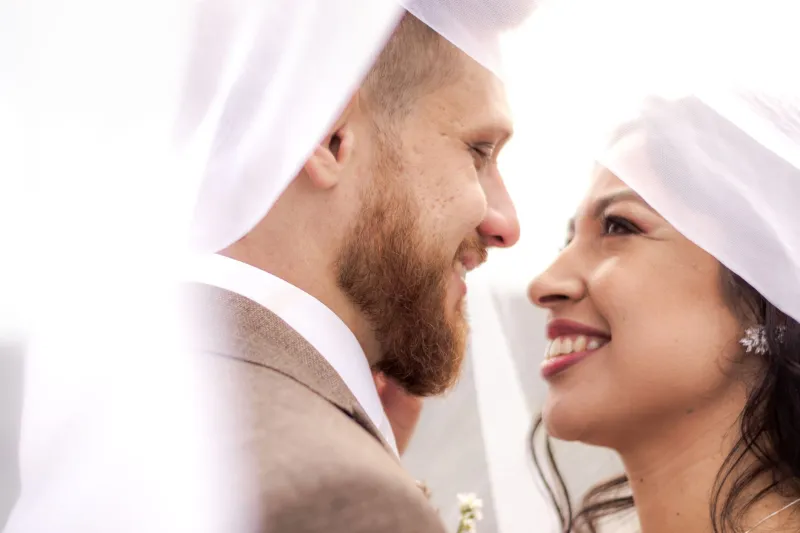
There is a particular look that comes over a couple about twenty minutes after the ceremony. The shoulders drop. The smile gets less rehearsed. Someone finally eats something. It is the look of two people who have stopped hosting and started being married. And it is almost never in the wedding film, because by then the cameras have packed up and the evening has turned into a playlist.
That is the quiet argument for a day-two shoot. Not a second wedding, not a re-run of the big moments, but a short, low-pressure session the morning after — or the afternoon after, depending on how the night went. A brunch with the guests who stayed over. A walk along the seafront in clothes that still smell faintly of confetti. A return to the register office steps, the church porch, or the pub where you had your first date. In film terms, it is the exhale at the end of the story.
Why the morning after sounds different
A wedding day is loud. Not just the band, but the logistics: the schedule, the introductions, the photographs, the cousin who wants a group shot with every branch of the family tree. Even the calmest couple is performing a version of themselves. That is fine — it is part of the day — but it means the footage is often about the event rather than the people inside it.
The day after, there is no running order. You might be tired. Your shoes might be in a bag. You may be eating a bacon roll in a hotel conservatory while someone’s toddler runs laps around the table. That is exactly the point. The camera can sit back and catch the way you lean into each other when no one is asking you to cut a cake. For a One Forever Films wedding story, that kind of footage gives the ending somewhere human to land.
What a day-two shoot can actually look like
It does not need to be a full production. Most couples get more than enough from a relaxed hour or ninety minutes. Some options that work well in the UK:
- The slow brunch. A hotel breakfast room, a village café, or a marquee still standing in a field. Film the leftovers: the mismatched cups, the last few guests, the plates being cleared. It is ordinary, but it is the ordinary you will miss.
- A walk in wedding clothes. Not a styled shoot — just the two of you in whatever you wore, or a more comfortable version of it. A park, a coastal path, a quiet lane behind the venue. The clothes do a lot of storytelling without anyone saying a word.
- A return to the meaningful place. The church where you said the vows. The register office on a wet Tuesday. The bench where you got engaged. Revisiting a place the day after can feel strangely grounding, especially if the wedding itself was a blur.
- The Sunday roast. A pub back room with the people who travelled furthest. A long table, a few pints, a dog under the table. It is not glamorous, but it is very British and very watchable.
The couple, not the hosts
One of the best things about day-two footage is what it leaves out. There is no receiving line. No one is waiting to congratulate you. You are not working the room. You are just there, with the people who are still around and the odd bit of admin — checking out of the hotel, loading the car, finding a lost cufflink.
That is where the small gestures live. A hand on a shoulder. Someone doing up a button. A shared look over a stack of cards and gifts. The camera does not need to create a moment; it just needs to be in the room when one happens. This is the version of you that your future family will recognise — not the couple at the top table, but the couple on the sofa the next morning.
Planning it without wrecking the weekend
A day-two shoot should feel lighter than the wedding, not like a second job. A few practical guardrails help.
Keep it short. Sixty to ninety minutes is plenty. If you are doing brunch and a walk, build in a proper gap. Nobody wants to be filmed while anxious about a train.
Talk to the venue. If you are returning to the wedding venue, check access and timings. Some places are fine with a quiet Sunday shoot; others are already turning the room around. National Trust and English Heritage properties may have permit rules, so ask early.
Think about clothes. You do not need the full outfit again. A clean shirt, the same shoes, a jumper over the dress — whatever feels like a gentle echo rather than a costume. If the weather is grim, bring a coat you actually like.
Have a wet-weather plan. This is the UK. A covered market, a hotel lounge, a church porch, or a favourite café can be just as cinematic as a hillside. Soft overcast light is genuinely flattering; you do not need sunshine for good footage.
Don’t over-schedule. Leave room for coffee, a sit-down, a chat. The best bits often happen between the planned shots.
Light and location on a British Sunday
Morning light is gentle, especially in winter, but it is also short. If you are shooting in November or December, aim for late morning rather than early afternoon. In summer, an early walk before the day gets busy can be lovely — empty streets, low warmth, the sense that the world is still waking up.
Look for places with texture: a stone wall, a steamed-up café window, a beach hut, a hotel corridor with last night’s confetti still in the carpet. These details do more for a film than a grand backdrop. And if it rains, lean in. Umbrellas, wet pavements, and a dash from the car can be more charming than a perfectly dry scene.
How it fits the final film
A day-two shoot is not usually a separate film. It is a coda. In the edit, it can sit after the last dance or the final speech — a short, quieter sequence that says: and then it was just us. Twenty to forty seconds is often enough. A line of dialogue from brunch. A shot of the two of you walking away from the venue. The sound of a kettle in a hotel room.
It gives the film somewhere to go after the climax. Instead of ending on a big note, you end on a true one. That is the sort of ending that ages well — the one you will still want to watch when the confetti is a distant memory and the Sunday clothes have long since gone back in the wardrobe.
If you are planning a 2026 wedding and wondering whether the morning after is worth filming, the answer is usually yes — as long as it stays gentle. One hour, one good location, and no pressure to perform. The day itself will take care of the spectacle. The day after takes care of the truth.