Saved Seat, Full Heart: How to Film a Wedding When Someone Can’t Be There
A wedding day is supposed to feel full. Full room, full dance floor, full heart. But sometimes there’s a person who should be there and isn’t — a parent, a grandparent, a mate, a sibling. They might have died, they might be unwell, or they might be estranged. None of those absences feel the same, and none of them need to be tidied away for the sake of a nice film.
At One Forever Films, we think the best wedding films don’t pretend the day was perfect. They tell the truth of it, warmly. That means making room for absence without letting it take over the story. Here’s how couples — and filmmakers — can hold that balance.
Start With the Names, Not the Camera
Before anyone talks about shot lists, have a proper conversation about who won’t be in the room. Not in a morbid way. Just plainly. Was there a parent who died? A grandparent in hospital? A friend who fell out with the family? A sibling who wasn’t invited?
The language matters. Some couples will say “my mum died”; others will say “Mum isn’t with us”. Some will want the person named in the film; others will want a quiet nod and nothing more. A good filmmaker asks early, listens hard, and doesn’t assume that every absence needs a tribute.
This is also the moment to say what you don’t want. No lingering shots of an empty chair. No sad piano. No turning the wedding film into a memorial video with confetti. The couple sets the emotional temperature; the film follows it.
An Heirloom Is an Anchor, Not a Prop
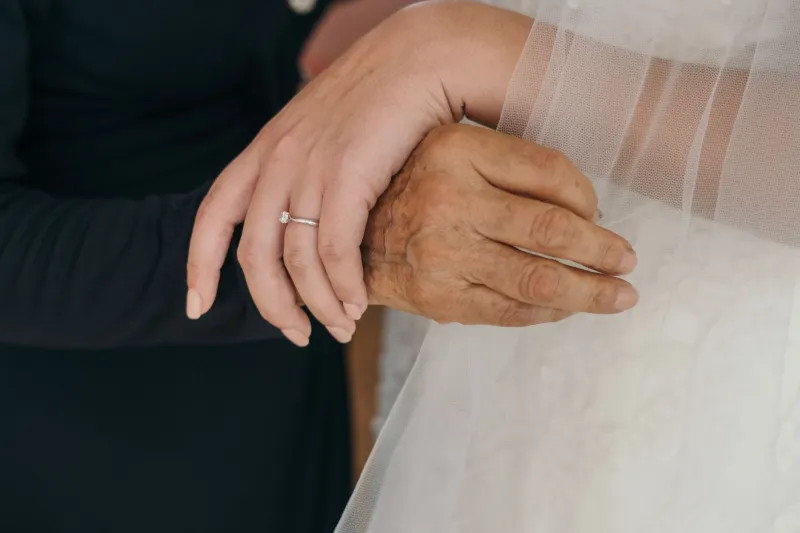
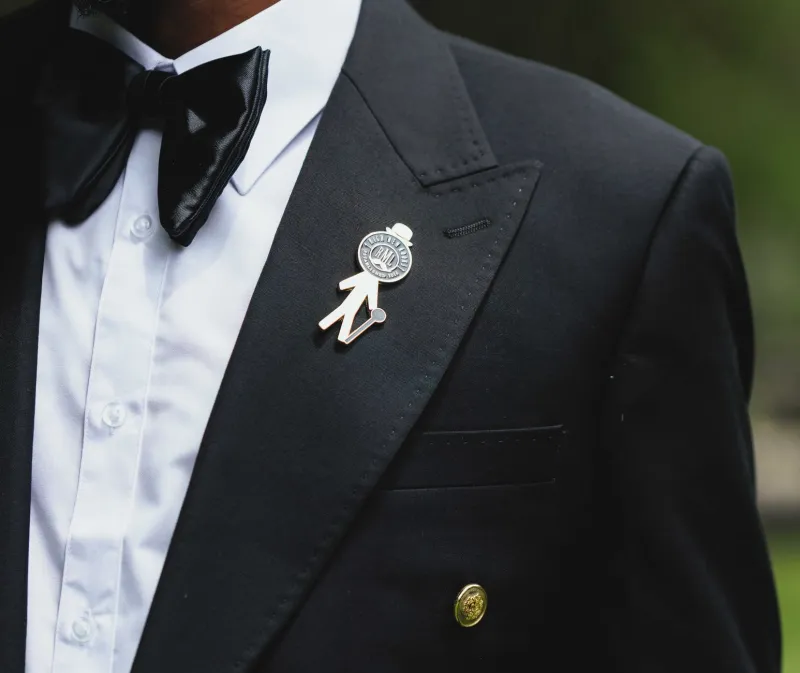
Objects can carry a person into the day without anyone having to make a speech. A grandmother’s brooch pinned inside a jacket. A grandfather’s watch on a wrist. A recipe card tucked into a bouquet. A hymn book from a family church. A cufflink that’s been to more weddings than most guests.
On film, these details work best when they’re filmed quietly — a hand adjusting the watch, a moment of stillness before the ceremony, a close-up that doesn’t announce itself. The camera shouldn’t point at the brooch like a museum label. It should catch it the way a guest would: briefly, fondly, then back to the room.
If the object is fragile or precious, say so in advance. We’d rather know than find out when someone’s shaking a 90-year-old piece of lace in front of a lens.
A Recorded Voice Needs Care
A recorded reading or a short clip of someone’s voice can be incredibly powerful. It can also be a lot. The key is consent and context. Who has the recording? Does the rest of the family know it’s being used? Is it a voicemail, a video from a birthday, a reading recorded before an illness?
Use it sparingly. A few seconds of a familiar voice can do more than a five-minute montage. If it’s a phone voicemail, don’t clean it up until it sounds like a robot. The imperfections are the point. That little crackle, the “hello, love” at the start — that’s the person.
If you’re planning a recorded reading in the ceremony, rehearse the technical side. A laptop that won’t connect or a speaker that squeals can turn a tender moment into a stressful one. And if the couple would rather keep the recording for the film only, that’s a valid choice too.
The Quiet Toast and the Spoken Story
Some families mark an absence with a toast. Others tell a story at dinner — the funny one, not the sad one. Both can work beautifully on film because they’re human, not staged.
A quiet toast doesn’t need a spotlight. It might be one sentence from a best mate, a raised glass, a pause. The camera’s job is to catch the faces around the table, not just the speaker. That’s where the feeling lives: the half-laugh, the hand squeeze, the person who looks down at their plate for a second.
Spoken family stories are trickier. They can be warm and generous, or they can put a grieving person on the spot. If a couple wants a story told, decide who’s telling it and check they’re happy to do it. Don’t ambush anyone at the reception. A wedding isn’t a roast, and grief isn’t a party game.
When the Absence Is Estrangement
Not every missing person is mourned. Sometimes the gap is complicated: a parent who left, a sibling who isn’t speaking, a friend who wasn’t invited. Couples often feel pressure to explain that gap to guests, or to pretend it isn’t there.
On film, the best approach is usually restraint. Don’t build a “missing person” arc if the couple doesn’t want one. Don’t film awkward family seating arrangements if they’re a sore point. And don’t assume that every older man in a suit is the father of the bride.
This is also a practical thing: British wedding ceremonies still carry a lot of traditional wording. “Who gives this woman?” can land badly when a father isn’t there. Couples can choose different wording, walk each other down the aisle, or have a friend or grandparent do the honours. The film should reflect the choice they made, not the template they avoided.
Editing: The Right Amount of Presence
In the edit, absence should be a thread, not a blanket. A few beats are usually enough: one early on, one near the middle, one near the end. A hand on an heirloom. A line in a speech. A brief shot of a seat that’s been saved, with flowers on it, then back to the dancing.
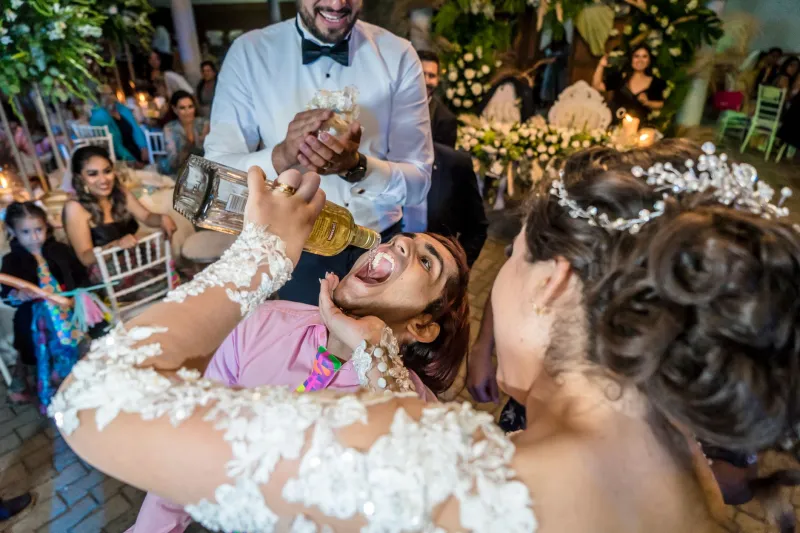
The film should still breathe. It should still have daft dancing, clinking glasses, a kid running through the shot, someone’s nan doing a finger of whisky. If the absence swallows all of that, the film stops being a wedding film and becomes a different thing entirely.
A good test is this: does the film feel like the day, or does it feel like a lesson about grief? Couples should recognise themselves in it. If they wanted the day to be joyful, the film should be joyful — with a lump in its throat now and then, not a permanent sob.
A Short Checklist for Couples
Tell your filmmaker in advance. Name the person, the relationship, and what you do — or don’t — want made of it.
Choose one or two anchors. An object, a photo, a song, a toast. More than that can start to feel like a theme park.
Decide who knows. Not every guest needs the full story, and not every family member needs to be surprised by a tribute on camera.
Check ceremony wording. If a traditional line doesn’t fit, change it. Your registrar or celebrant will have seen it all before.
Be honest about the edit. If a first draft feels too sad, say so. If it feels too breezy, say that too. The film is for you, not for us.
The Whole Story, Not the Whole Wound
A missing person is part of a wedding day. They’re part of the family story, the jokes, the mannerisms, the way someone holds their knife and fork. But they’re not the whole story. The whole story is a room full of people choosing to be there, and a couple choosing each other.
A wedding film should hold both: the saved seat and the full dance floor. The quiet pause and the loud chorus. The person who isn’t there, and the life that carries on around them. That’s not an easy balance, but it’s an honest one — and honest is what lasts.