Every Guest in the Frame: Making Your Wedding Film Work for Deaf and Neurodivergent Viewers
Most wedding films are built for the ears first. The vows swell, the music lifts, a glass clinks somewhere in the background. It can be lovely. It can also quietly leave people out. If your film only works for hearing, neurotypical guests who can process fast cuts and layered sound, it is not quite finished yet.
Accessibility is not a bolt-on or a box-ticking exercise. It is part of the storytelling. A captioned, thoughtfully framed wedding film does not feel less romantic or less cinematic. It feels more considered, more generous and, frankly, more like a family heirloom. Whether you are planning the wedding itself or briefing a filmmaker after the day, these are the practical bits worth thinking about early.
Start with the people around the screen
Before you get into technical terms, make a list of who will actually watch the film. Think about the grandparents who struggle with the TV volume. The friend who is deaf and uses British Sign Language. The cousin who is autistic and finds rapid editing overwhelming. The uncle who has hearing aids but still misses half the speeches. Some guests will tell you what they need. Others will not.
A useful question is simple: who do we want to feel included when this film is played at home, at a party or at a anniversary screening in years to come? That answer should shape the edit, not just the delivery format.
Captions are not the same as subtitles
For wedding films, burnt-in captions are usually the most reliable option. They are part of the picture, so they survive being shared on WhatsApp, copied to a USB stick or played on a laptop with the sound off. Closed subtitles can be switched on, which is great, but they depend on the player and the person knowing where the menu is. Burnt-in captions remove that friction.
The best captioning does more than transcribe speech. It labels who is speaking and notes meaningful sounds, such as laughter, clapping or a ceilidh band starting up. It does not need to describe every rustle of fabric. The aim is clarity, not clutter.
Ask your filmmaker how they handle caption style. Legible font, good contrast and sensible placement matter. Captions should not sit over faces or cover the rings during the vows. A short sample clip will tell you more than a long email about accessibility. If your film includes a mix of languages, Welsh or Irish, for example, make sure the captioning plan accounts for that too.
Framing a BSL interpreter properly
If you or a guest uses British Sign Language, the interpreter needs to be visible, not an afterthought at the edge of the frame. That means a camera angle from roughly waist or chest up, with hands, face and upper body in shot. Good lighting matters. So does a clean background.
Brief the filmmaker before the day. Explain where the interpreter will stand and whether they will be signing the vows, speeches or both. Ask how they plan to frame that shot. A picture-in-picture option can work beautifully for a wedding film, but it needs to be planned, not patched in later. If the interpreter is only captured in wide shots, the final film will be harder work for Deaf viewers who rely on BSL.
Remember, too, that not every Deaf guest uses BSL. Some people lip-read, some use hearing aids or cochlear implants, and some prefer captions. Offering both signing and captions is not overkill. It is just good hosting.
Keep the story visual, not just audio-led
Audio description is the process of narrating key visual information for blind and partially sighted viewers. For a wedding film, a full audio-described track may or may not be necessary, but the principle is useful: can the story be followed with your eyes alone? If the film relies on a whispered joke, a meaningful glance or a piece of music to carry the emotion, make sure there is a visual anchor too.
For neurodivergent viewers, the edit itself matters. Rapid cuts, flashing transitions, sudden volume shifts and layered sound can be exhausting. A slightly calmer cut, with steadier pacing and fewer audio spikes, can still be beautiful. It may even suit the material better. You do not need a separate 'special' film. You need a version that respects the audience.
Brief your filmmaker in plain English
You do not need to become a captioning expert. You do need to ask clear questions. Will captions be burnt in or supplied as a separate file? Who writes the transcript? Can we check names and spellings before the final export? Is there an accessibility version with a calmer mix or audio description? What does it cost, and how long does it take?
Put it in writing. A good filmmaker will welcome the conversation. If accessibility is treated as an awkward extra, that tells you something. If it is treated as part of the craft, even better.
The living-room test
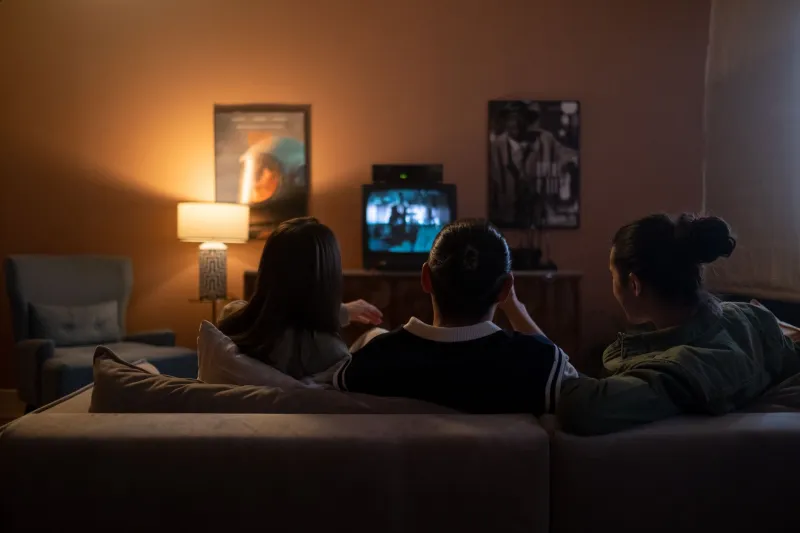
When the film arrives, watch it the way your family will. Play it on a normal telly with the volume lower than usual. Watch it on a phone. Watch it with someone who needs captions. Ask whether the text is big enough, whether the interpreter is clear and whether the story still lands.
A wedding film is meant to last. It should not ask anyone to sit politely and miss the point. With a little planning, captions, signing and a calmer edit can sit alongside the golden-hour shots and the confetti without stealing the show. The best compliment is not just that it looks beautiful. It is that everyone in the room can follow it, feel it and want to watch it again.