Sticky Carpets, Golden Hour: Why the Great British Pub Beats the Ballroom on Film
Somewhere between the rise of the minimalist barn and the quiet squeeze on wedding budgets, the Great British pub has become one of the most filmable venues in the country. Not necessarily the gastropub with the tasting menu and the private dining room — though those have their charms — but the proper local. The one with a carpet that has seen things, a landlord who knows everyone's name, and a jukebox in the back room that has been playing the same three songs since 1998.
Couples are increasingly booking these rooms for the whole do, or at least for the evening half. And from a filmmaking point of view, it makes a certain kind of sense. A ballroom can be stunning, but it often arrives with the same lighting rig, the same chair covers and the same sense that a wedding is happening at you. A pub, by contrast, feels like a place where a wedding is happening among people. That distinction shows up on camera far more than you'd think.
The Room Does Half the Work
A good pub is already dressed. There's wood, brass, worn upholstery, odd lamps, framed photos of people nobody can identify and a fire that may or may not be real. None of it is coordinated, and that's the point. Your filmmaker doesn't have to build a world from scratch; they just have to find the corners where the light falls nicely and the background tells a story.
Ballrooms tend to photograph as large, clean and slightly anonymous. Pubs photograph as specific. You can look at a frame years later and think, that's the Snug, rather than that's a function room with a dance floor. If you want a film that feels like an heirloom rather than a brochure, specificity is everything.
Sound Advice (and Why You Shouldn't Fight the Jukebox)
Here's the practical bit. Pubs are not acoustically neutral. They echo, they hum, they have a hand dryer in the loo that sounds like a small aircraft. That's fine — but it needs planning.
First, talk to the landlord about the jukebox and any background music during speeches. Most are happy to turn things down or off for ten minutes. Second, if you're having speeches in the main bar, ask your filmmaker about lapel mics for the speakers. A good wedding film lives or dies on whether you can hear the words; the ambient clink of glasses is charming, but only if it sits underneath the voices rather than on top of them.
Third, don't try to turn the pub into a nightclub. If you want a dance floor, lean into what the room already does well: a playlist that suits the space, maybe a live acoustic set early on, and a filmmaker who knows how to work with a small room rather than against it. The best footage often comes from people who have stopped performing for the camera and started behaving like themselves. A jukebox helps with that. A full concert PA system usually doesn't.
Light You Can't Fake
Pub lighting is a gift and a puzzle. On the one hand, warm bulbs, candles and a bit of window light can look gorgeous — soft, golden and genuinely romantic. On the other hand, mixed lighting is a nightmare if you don't know what you're doing, and some pubs have all the ambience of a car park at 4pm.
If you're planning a pub do, visit at the same time of day as your reception. Look at where the windows are, where the lamps sit, and whether the back room has any natural light at all. Autumn and winter weddings in particular can lose the sun by 4.30pm, so a filmmaker who knows how to use practical lights — the lamps that are already there — is worth their weight in gold. Ask whether they'll bring their own lighting, and whether the pub is happy for them to move a few things around. Most landlords are more flexible than couples expect, as long as you ask early.
The Moments Filmmakers Wait For
Every wedding filmmaker has a mental list of shots they hope for. At a pub reception, the list is different. It's the grandmother holding court in the corner. It's the best man trying to work the fruit machine. It's a kid asleep under a coat on a banquette while the party carries on above them. It's the landlord pulling a pint in the background of a first dance. It's the moment someone realises the buffet has been out for two hours and decides to go back anyway.
These aren't the shots you can choreograph. They happen because the room is small enough for people to be themselves and close enough for a camera to catch it without intruding. A ballroom can make guests feel like an audience; a pub makes them feel like regulars. On film, that reads as warmth.
Planning the Pub Do Without Killing the Vibe
A few practical things worth sorting before the day. Check the pub's capacity against your guest list — not just for comfort, but for camera movement. A packed room is atmospheric but difficult to film; a room with a bit of breathing space gives your filmmaker somewhere to stand. Ask about access times for kit, parking, and whether the pub will be open to the public during your do. A partial buyout can be lovely and cost-effective, but it changes the sound and the energy.
Also check curfews and noise restrictions. Some pubs have neighbours closer than you'd think. If you're planning a late finish, ask whether there's a lock-in option and whether your filmmaker can stay for it. Some of the best footage happens after the official end time, when the ties are off and the last few guests are refusing to leave.
After the Formalities: Where the Film Actually Lives
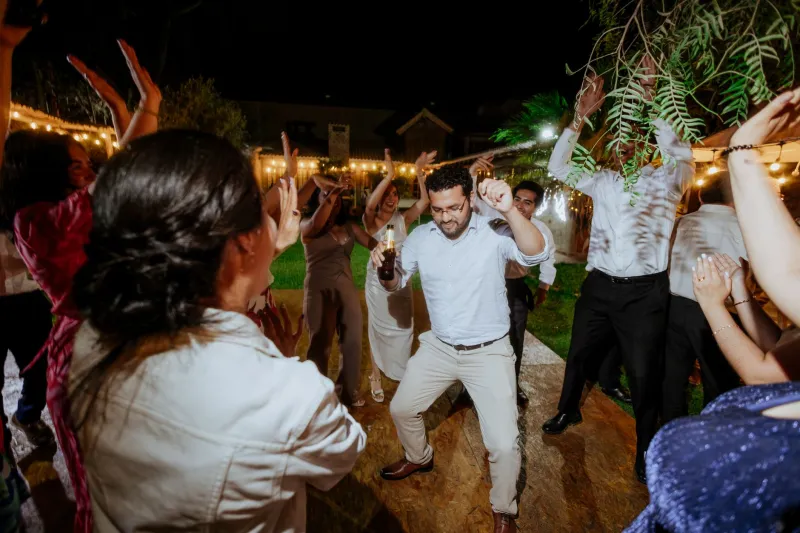
Here's the thing about pub receptions: the formal bits are over quickly. Speeches, cake, first dance — done by 9pm if you're efficient. What follows is the real wedding film. The bit where your dad is telling a story to someone he's just met. The bit where your mates are trying to teach the landlord a dance. The bit where the jukebox finally lands on the right song and the whole room sings it badly.
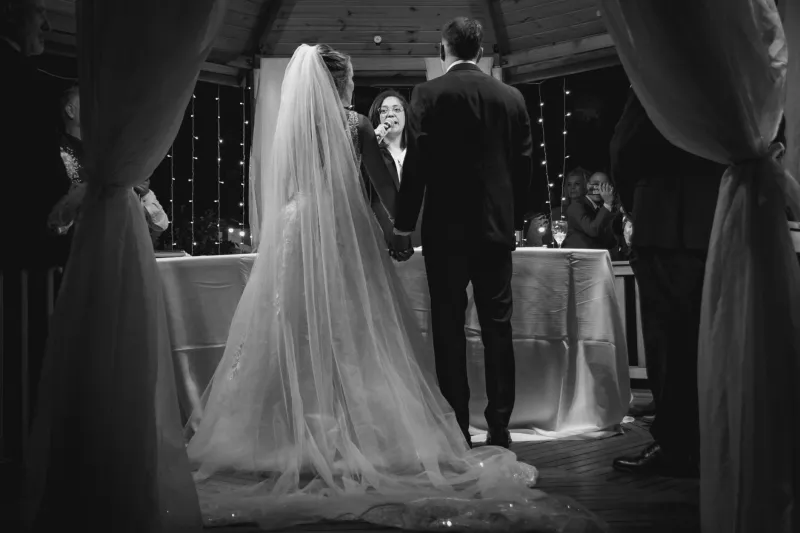
That's not to say the ceremony and the vows don't matter. They're the spine of the film. But the pub is where the film gets its texture. It's where the day stops being an event and starts being a memory. And if you're lucky, it's where your filmmaker gets the shot you'll want to watch when you're seventy: not the perfect kiss, but the imperfect, noisy, lovely room where everyone you love is crammed together, having a go.
So if you're weighing up a ballroom versus the back room with the jukebox, don't discount the sticky carpet. It might just be the best set you'll ever have.